

Over 50,000 runners will take to the streets November 2nd for the TCS NYC Marathon. If you are one of them, this is your week to keep things simple, protect your body, and set yourself up for a smooth recovery once you cross the finish line. Preparation goes far beyond logging miles, it’s about keeping small aches from becoming big injuries so you can stay healthy, run strong, and finish proud.
One Week Out: Final Taper
Reduce volume. Cut your training down by 40-60% so your body can recover and feel better before race day.
Listen to your body. If you feel fatigued, prioritize rest and sleep over extra miles. Weave in a couple full rest days this week.
Cross train. Early in the week cycling, swimming, or easy jogging are great ways to keep moving comfortably.
Practice your race pace. Late in the week, do short stints at your marathon pace with easy float recoveries between reps to lock in rhythm (4-6 reps x 2-3 minutes).
How does tapering help? (quick science)
Tapering lets muscles repair, glycogen refill, and can support oxygen delivery to the muscles through increased red blood cell count, which improves aerobic capacity. Your body is doing the quiet work so you can run faster, longer on race day.
Keep your diet familiar. No experiments this week. In the last 48-72 hours, gently increase carbs, keep fiber moderate, and continue your fluid intake throughout the day. Avoid foods that do not settle well with your stomach.
Race Day
Short and easy warmup.
Wake up, don’t wear yourself out. 5 min brisk walk → easy jog, leg swings, walking lunges with reach, hip circles and ankle pulses (30–45s each).
Pacing guardrails.
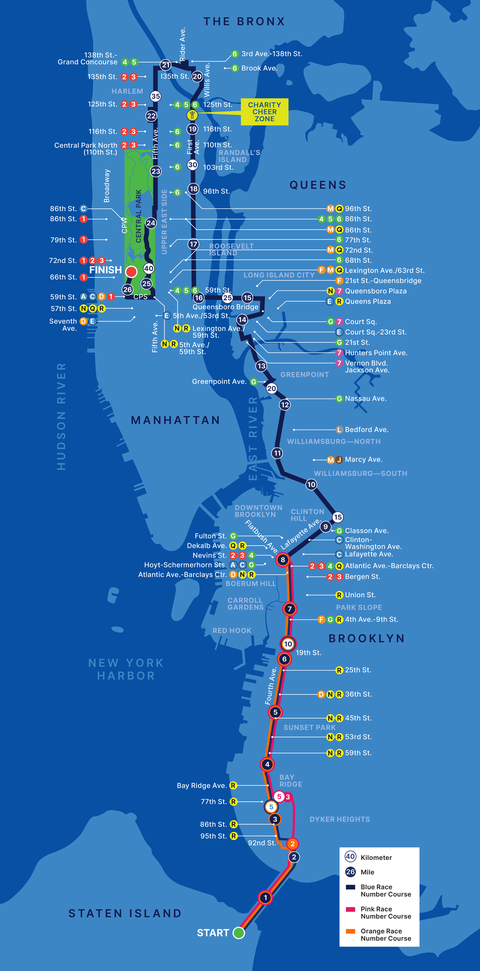
Start off a bit slower than your goal pace to ease into things, build up to your goal, don’t over exert yourself early. If your hips or calves tighten late, shorten your stride and quicken cadence to reduce strain. On bridges and rollers, keep steps light and quick, shorten your stride and let cadence rise. Float the downhills (don’t brake).
Fueling and Hydration.
Prepare an intake schedule based on your needs for carb and electrolyte intake throughout race day, see our article on how to build your marathon hydration plan.
Listen to your body.
If something feels off, slow to a walk or even stop. Any major pains, chest pain, severe dizziness, confusion — put your health first and seek medical help.
Quick mid-race fixes.
- Calf cramp: Walk 30–60s → gentle calf stretch → resume with shorter stride + higher cadence.
- IT band/knee ache: 20–30s walking lateral steps, keep foot strike under center of mass.
- Side stitch: Exhale on the opposite foot, press fingers under ribs, take 6–8 calm breaths.
- Hot spot/blister: Stop early to adjust sock/shoe or add lube — quick fix can end up saving your race.
Post-Marathon Recovery
The finish line starts your recovery window. Keep moving, refuel, rehydrate, and set up the next 72 hours on purpose.
Keep moving.
Fight the urge to sit down as soon as you finish — walk for a bit so you don’t lock up.
Refuel and rehydrate fast.
Prioritize fluids, electrolytes, carbs to restock glycogen, and protein to begin muscle repair. You do not have to overthink “clean” eating — focus on getting calories in.
Avoid too much static stretching.
Your muscles are full of micro tears that can worsen if you start static stretches, deep massages, or hard foam rolling too soon after the race.
Go low impact for the first week.
Short, easy walk/cycle/swim sessions are fine to get blood flowing without pounding.
Take 5–10 days off running.
Adjust based on how beat-up you feel and your psychological readiness.
Keep intensity low for 2–3 weeks.
This is when injury risk spikes. Avoid high-intensity training until your body is fully recovered.
Return gradually after 3–4 weeks.
Once fatigue is low and your easy runs feel smooth, build back slowly and continue monitoring your health.
How Prestige Health & Wellness Supports Your Recovery and Preventative Care
At Prestige Health & Wellness, our goal is to walk with you from your first steps back to peak form.
- Chiropractic adjustments: Gentle, targeted adjustments to restore alignment, ease joint pressure, and unlock smoother motion.
- Normatec compression therapy: Reduces post-race heaviness and helps you feel fresher for your first walks and easy jogs.
- Manual traction & soft tissue work: Physical therapy techniques to ease stiffness and restore mobility.
- Preventative care: Improve mobility, core stability, and movement patterns so you can run stronger and recover faster.
From our entire team at Prestige Health & Wellness: Good luck with your 26.2. Stay healthy, run strong, and finish proud!
Remember — training gets you to the start; smart recovery gets you to the next one stronger.
Need support? Book with an expert chiropractor or physical therapist.