

Trigger points and desk tension may contribute to neck pain, but the tender spot is not always the whole story. Stretching, massage, or a careful self-care tool may help some short-term symptoms. If the same pain returns after work, sleep, commuting, or workouts, the next question is what keeps recreating the pattern.
For recurring neck pain, an assessment can connect what you feel with what a provider finds: neck and upper-back mobility, muscle sensitivity, desk setup, shoulder mechanics, strength, workload, and nerve-related signs.
Why desk tension can settle into the neck
For many Manhattan desk workers, neck tension follows a familiar rhythm. Long screen time, a laptop that pulls the head forward, a phone in hand, a commute, and a compressed schedule can leave the neck and upper back holding one position for hours.
That does not mean desk work is damaging your body. It means the body may be tolerating more static load than it can comfortably recover from that day. The upper trapezius, levator scapulae, shoulder area, and muscles along the neck can feel tight or tender. The upper back may stiffen. The shoulders may round forward. Stress and poor sleep can make the same area feel more reactive.
This is where self-diagnosis gets tricky. A painful spot may be part of the problem, but it may also be the place where a broader pattern is showing up. Screen posture, text neck, shoulder endurance, workstation habits, and how often you move during the day can all matter.
What trigger points may mean
A trigger point is often described as a tender, irritable area within a muscle that can be painful locally and may refer discomfort nearby. In plain English, it is a sensitive spot in soft tissue, not a complete diagnosis by itself.
Some patients with myofascial pain feel a knot or band in the upper trap or neck-shoulder area. Pressing on it may reproduce the familiar ache. That can be useful information, but it does not prove the tender spot is the only driver.
A better clinical question is whether the trigger point is isolated, recurring because of daily load, or overlapping with joint stiffness, posture habits, shoulder mechanics, strength deficits, or nerve irritation. That is the kind of distinction a home tool cannot make for you.
What a 2025 Journal of Chiropractic Medicine study suggests
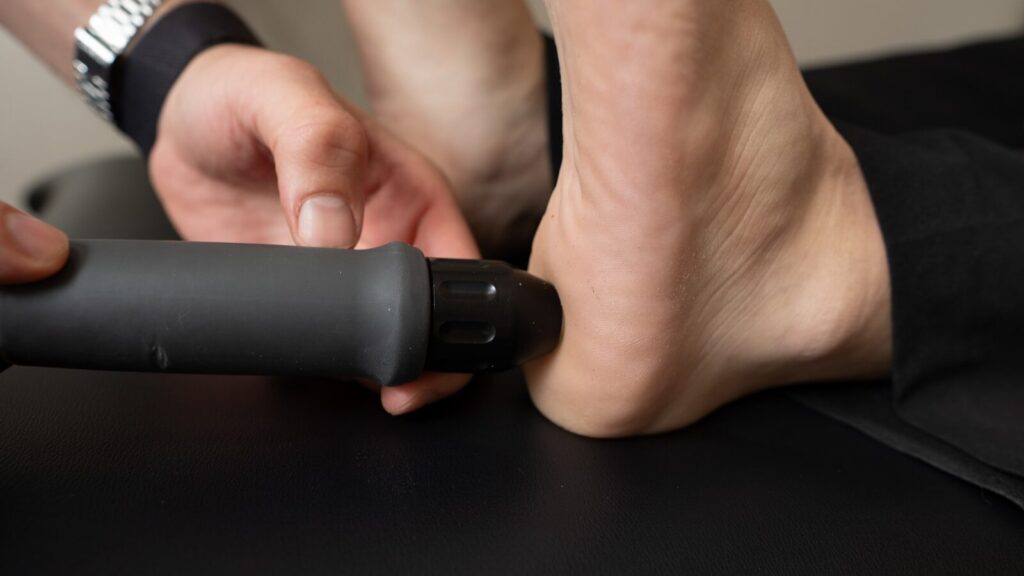
A 2025 Journal of Chiropractic Medicine randomized trial looked at working-age adults with chronic neck pain and active myofascial trigger points in the upper trapezius. The study compared percussive massage therapy with neck and shoulder stretching over a short treatment period.
In that study, both groups improved on several measures, including resting pain intensity, neck disability, some neck movement measures, and patient satisfaction. Percussive massage therapy showed stronger effects than stretching for some range-of-motion measures, but it was not superior for every outcome.
That keeps the evidence useful without overstating it. The study suggests that percussive massage may help some short-term movement outcomes in a specific group. It does not prove that massage guns resolve trigger points, that every neck pain case needs percussive therapy, or that PHW uses the exact study protocol. It also does not replace a clinical exam when symptoms persist or change.

What self-care can and cannot do
If symptoms are mild, familiar, and improving, gentle movement breaks, stretching, heat, breathing resets, and careful soft-tissue work may help short term. A massage gun or similar tool may feel useful for some people, but the neck requires caution. Avoid aggressive pressure, avoid sensitive areas, and stop if the technique increases pain or creates new symptoms.
Self-care has a real limit: it can change how an area feels, but it cannot tell you why the same area keeps flaring. If stretching helps for an hour and the tension is back by the afternoon, the issue may involve workload, positioning, mobility, strength, recovery, or how your body responds to a long day.
Seek urgent medical care if neck pain follows trauma, is severe or worsening, or comes with weakness, numbness, tingling, radiating arm pain, dizziness, fever, unexplained weight loss, loss of coordination, or other concerning changes. If a self-care technique makes symptoms worse, stop and ask a qualified clinician.
What a provider may assess
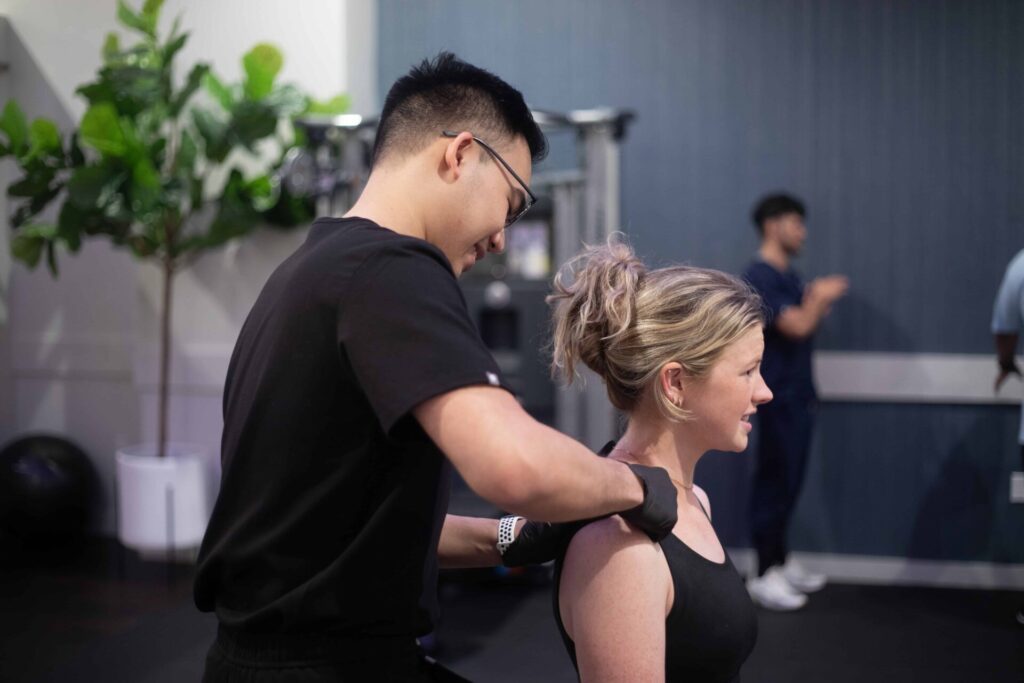
A provider should not look only at the spot that hurts. The exam should compare your symptoms, your history, what you have already tried, and what shows up clinically.
For recurring neck tension, an assessment may look at:
- Neck range of motion and joint mobility.
- Upper-back mobility and shoulder mechanics.
- Muscle tenderness and myofascial pain patterns.
- Strength, endurance, and how the neck and shoulders handle workday load.
- Desk setup, screen height, phone habits, breaks, and daily function.
- Nerve-related signs, especially if pain travels into the arm or comes with numbness or tingling.
From a chiropractic perspective, chiropractic care may fit when joint mobility, spine-related symptoms, or movement restrictions are part of the picture. If soft-tissue sensitivity is prominent, provider-guided medical massage may be considered as one part of care. If the work setup and daily routine keep recreating the pattern, a posture assessment or ergonomics-focused guidance may help clarify what needs to change.
Under one roof does not mean every patient needs every service. It means the care path can be easier to sort out when providers can communicate and the recommendation can match the patient, not the other way around.
When assessment is the smarter next step
If neck tension is mild and improving, a few careful self-care changes may be enough. If the pain keeps coming back, starts affecting work or sleep, limits workouts, or makes you rely on a tool every day just to get through the afternoon, it is worth getting clearer information.
At Prestige Health & Wellness, the goal is to help patients understand what may be contributing to the pattern and what kind of care, if any, fits. You do not need to know whether the issue is posture, muscle, joint, nerve-related, or workload-related before being evaluated. A good assessment should help sort that out.